Start With What the Part Needs to Resist
Heat. If the part will face sustained high temperatures, the coating’s maximum temperature rating matters more than any other spec. Denmac’s ovens and lines handle coatings rated up to 850°F, so high-heat applications are achievable, but the coating itself has to be rated for the actual operating temperature, not just the application temperature.
Chemical exposure. Solvents, acids, and reactive substances call for coatings with proven chemical resistance, epoxy powder coating is a common choice here.
Impact and abrasion. Parts that take physical wear, dropped tools, repeated handling, vibration, need a coating built to absorb impact without cracking. PVC (plastisol) coating is suited to this.
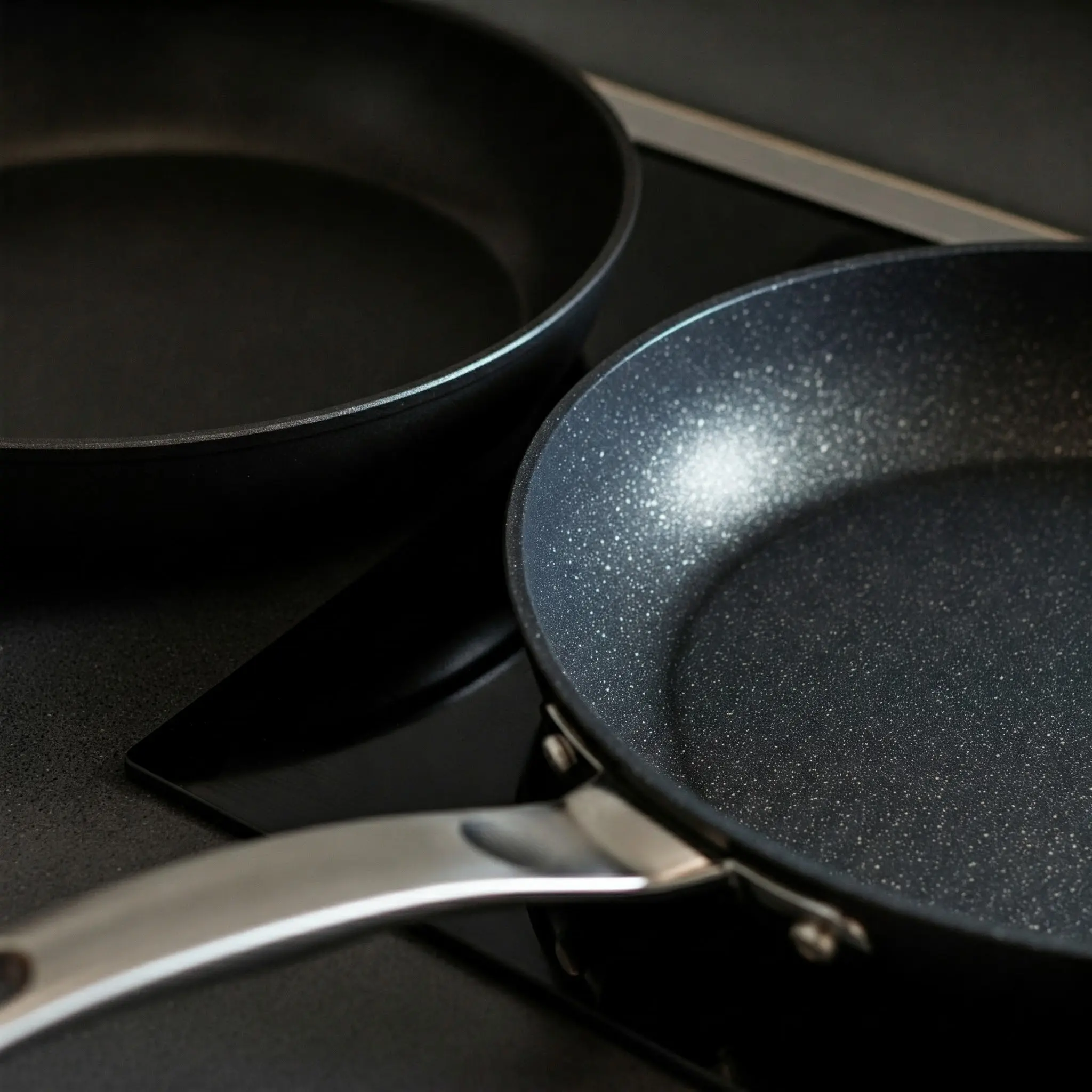
Friction and adhesion. If the part needs to resist sticking or needs to slide against another surface with minimal resistance, PTFE (Teflon) coating is the standard answer.
UV and weather exposure. Outdoor parts need UV-stable coatings. Polyester powder coating is built for this specifically, epoxy powder coating is not, it degrades under UV exposure and is better suited to indoor use.
Then Consider the Part’s Shape and Substrate
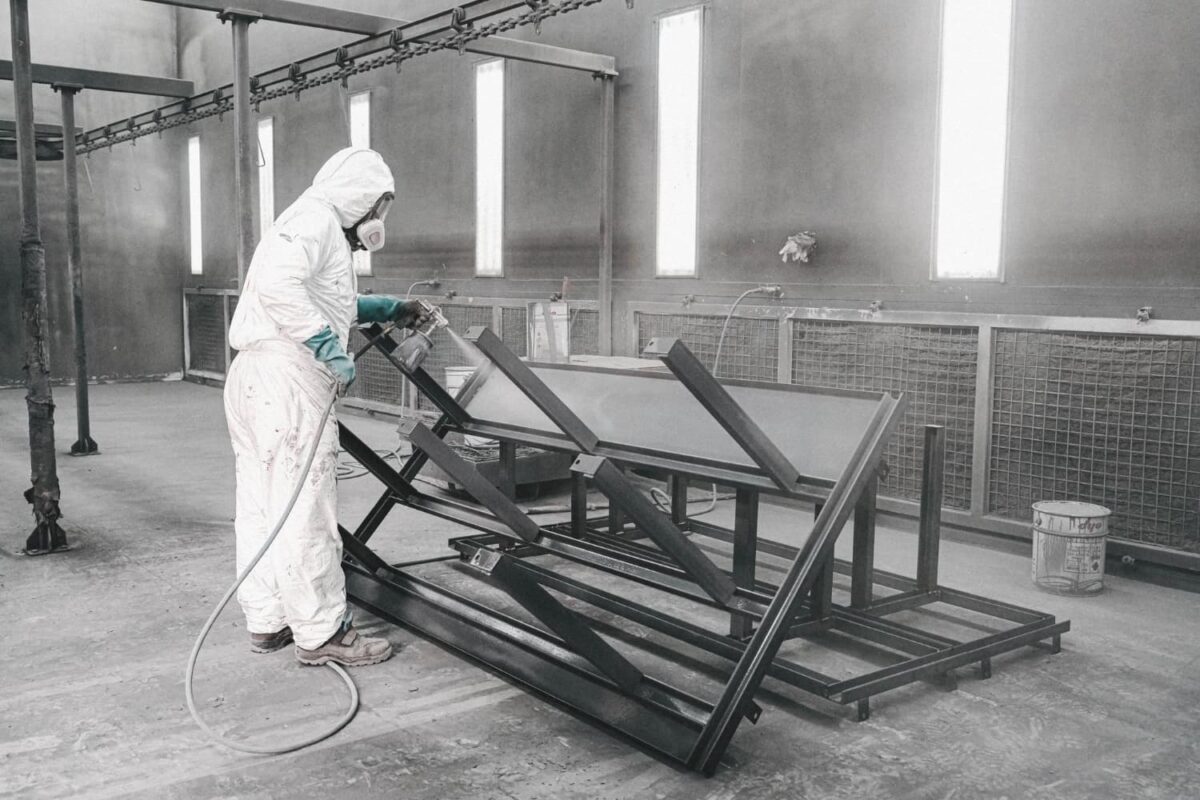
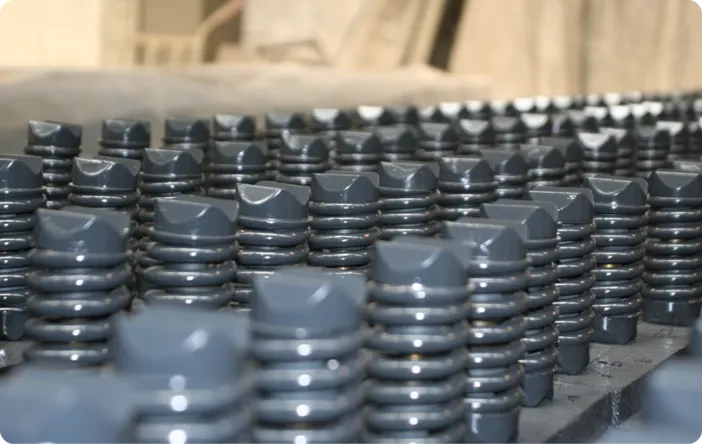
Complex geometries, tight corners, recessed areas, uneven surfaces, do not coat evenly with every method. Fluidized bed application, used for vinyl coating, produces a uniform coat on complex parts that electrostatic spray can struggle to reach evenly. Part size matters too, Denmac’s high-temperature coating line accommodates parts up to 19 feet in length, and our high-volume powder line handles parts up to 13 feet.
Don’t Overlook Pretreatment
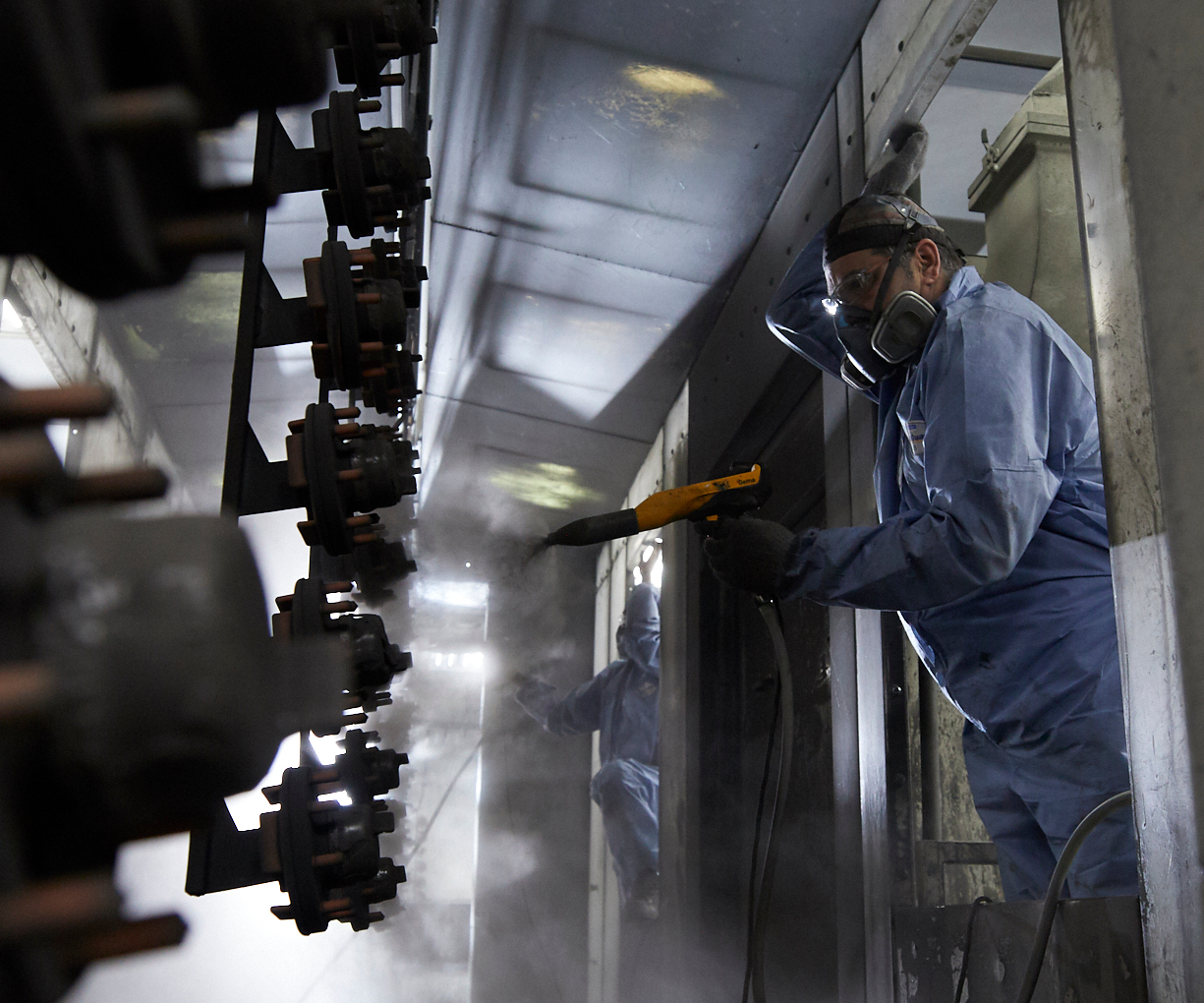
The coating is only as good as the surface preparation underneath it. Denmac uses zinc phosphate pretreatment (per TT-C-490 Type 1) and a five-stage iron phosphate pretreatment with polymer seal, depending on the substrate and coating combination, since proper pretreatment is often the difference between a coating that lasts years and one that fails early from poor adhesion.