
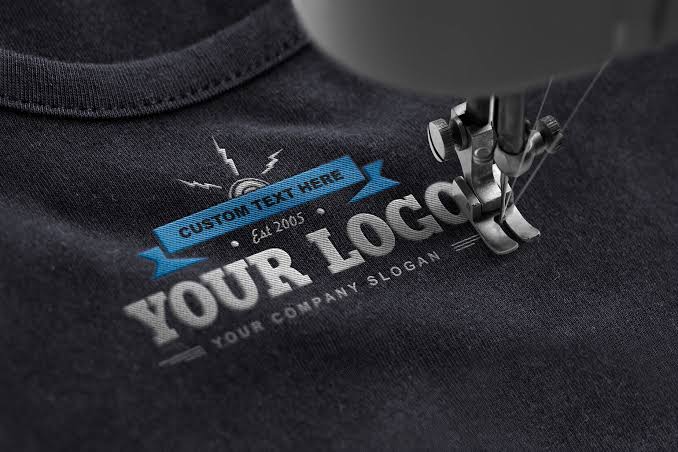
Embroidery puts your logo into the garment rather than on top of it. Thread stitched directly into the fabric does not crack, peel, or wash out, which is why it is the finish of choice for uniforms, corporate apparel, and anything meant to be worn hard and kept for years.
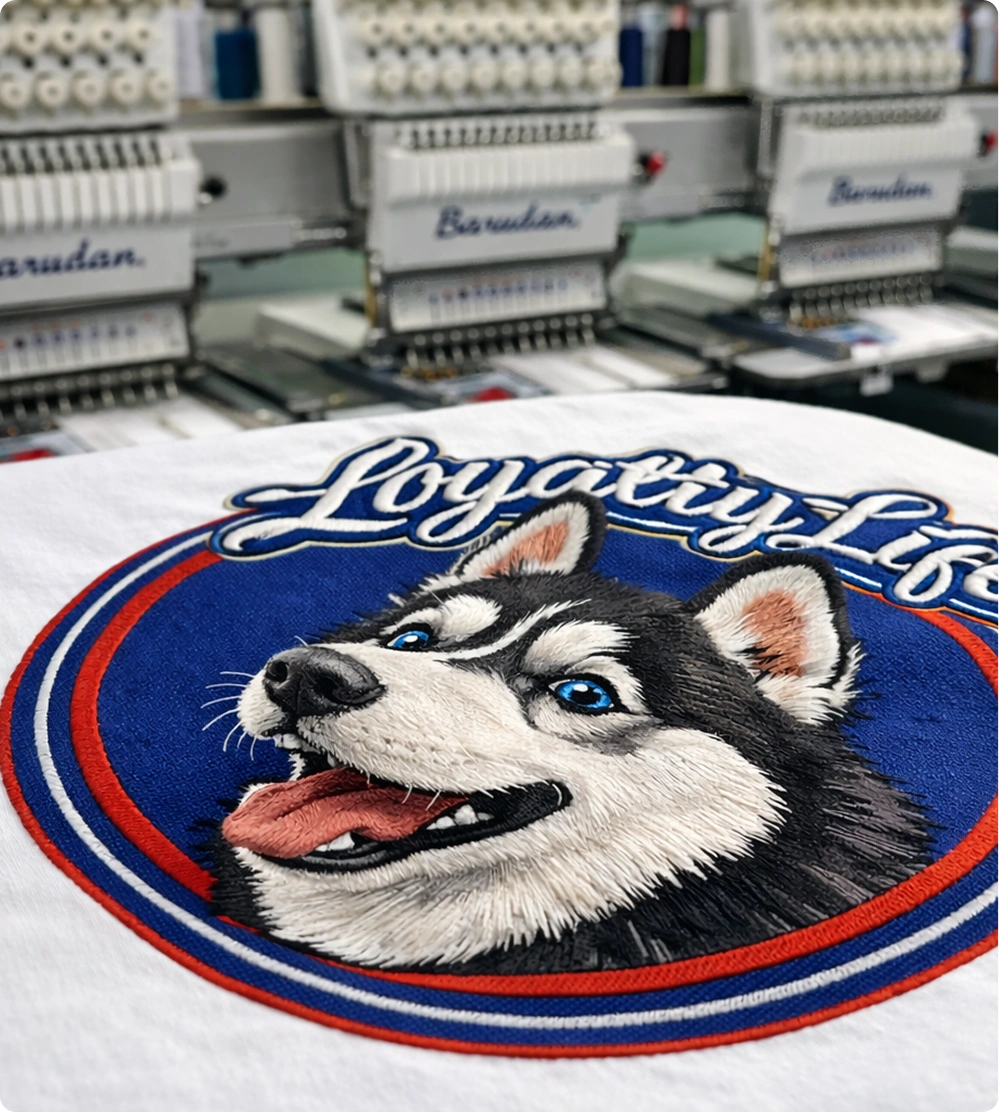
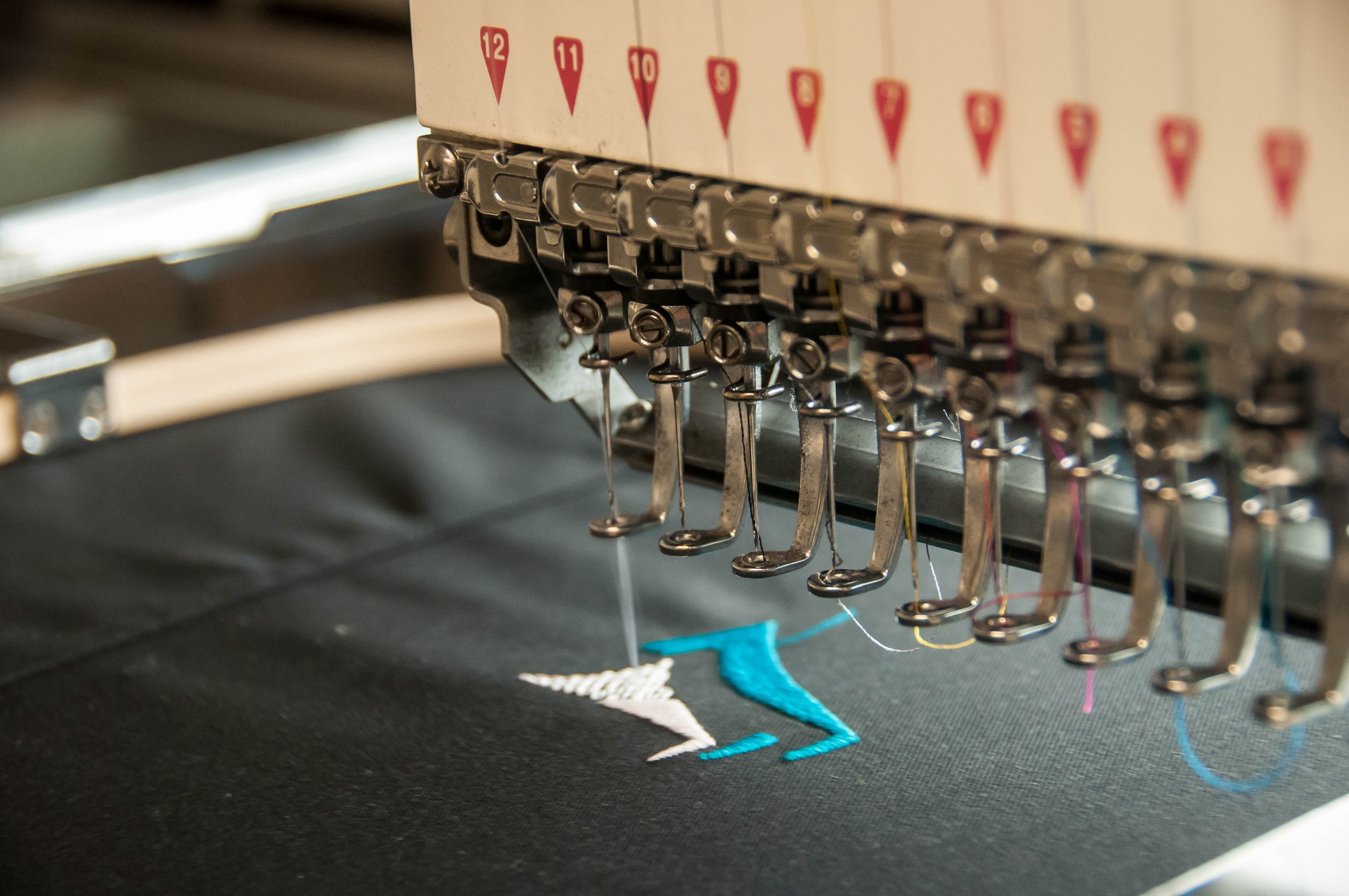
Denmac runs a ten-head embroidery machine out of our Paramount facility. Ten heads means ten garments stitched at once, from the same file, with the same tension and the same thread path. For you that means two things: complicated designs are handled without shortcuts, and the hundredth piece looks exactly like the first.

What We Embroider
Complicated Designs Are Not a Problem
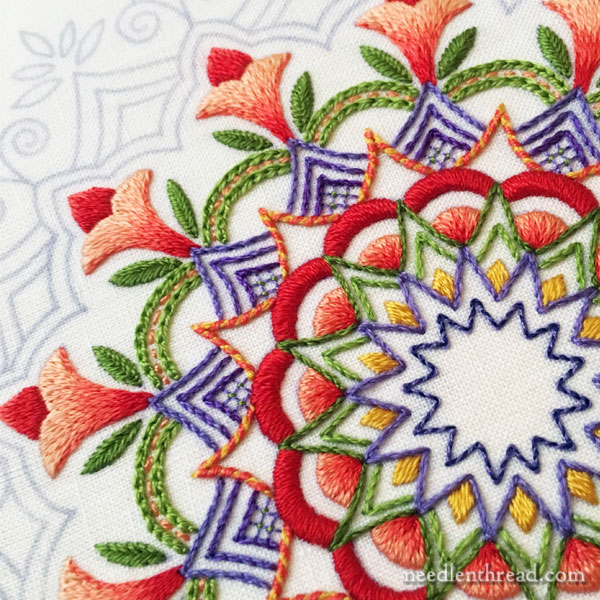
Most embroidery limits come down to equipment and setup. A shop working with one or two heads has to simplify a detailed logo to keep production moving. Multi-head production changes that math. Fine detail, tight lettering, layered color, gradients built from thread, and multi-position designs across chest, sleeve, and back are all workable.
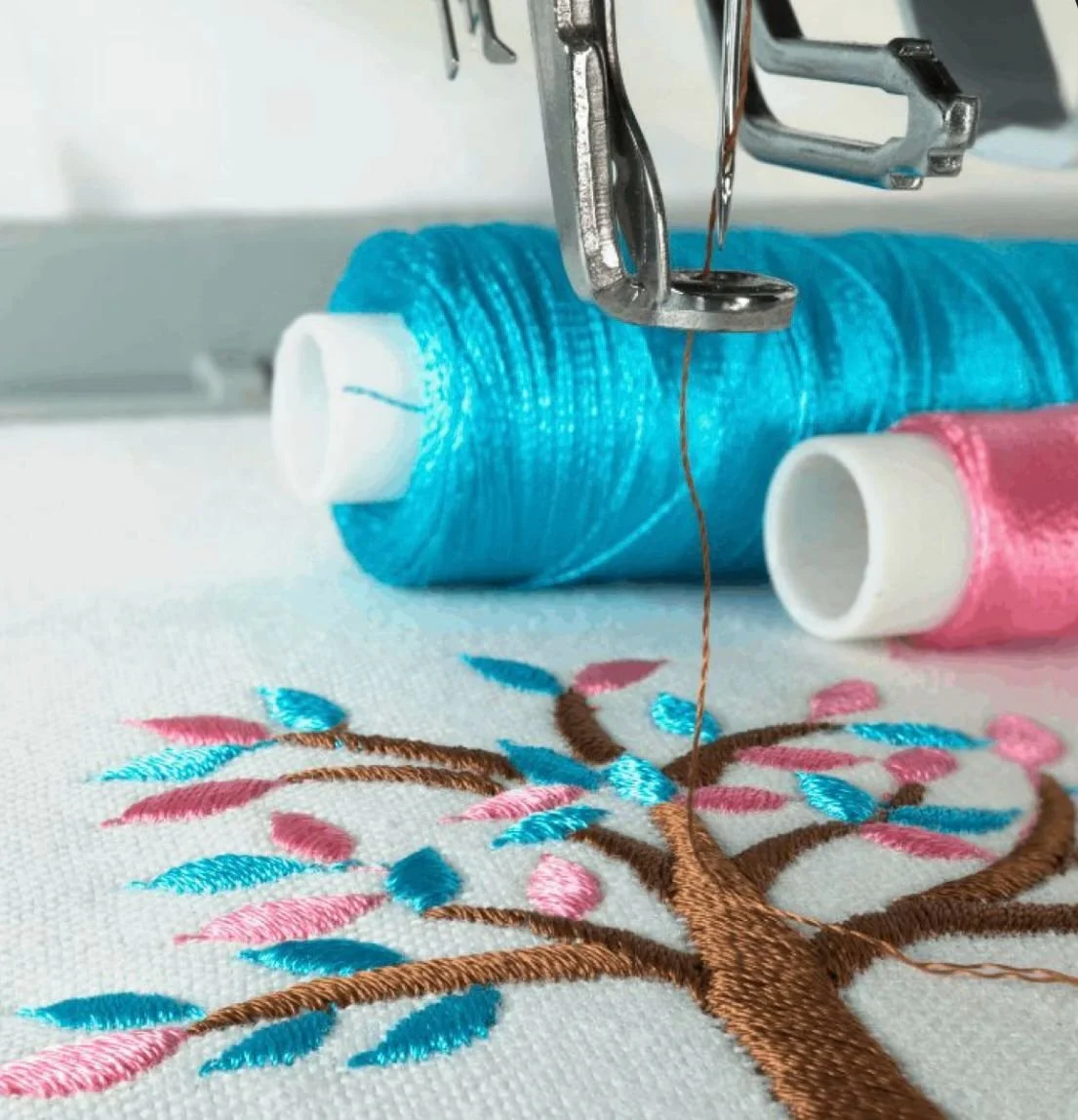
Your artwork is digitized before anything is stitched. Digitizing is the process of converting your logo into a stitch file that tells the machine exactly where each needle goes, in what order, and with which thread. It is the step that separates embroidery that looks sharp from embroidery that looks approximate. We do it properly, and once your file exists it is saved, so reorders run without setup.
Consistency Across the Whole Run
This is where a ten-head machine earns its place. Every head runs the same file and is set up the same way, so the design lands in the same spot on every piece. Order twelve hats for a trade show or several hundred polos for a full staff rollout and the output matches, piece to piece and reorder to reorder.
That matters most on uniforms. When a new hire gets a shirt eight months after the original order, it should look like everyone else’s shirt. With a saved stitch file and consistent equipment, it does.
One Shop for Every Decoration Method
Denmac has been finishing and decorating products in Paramount since 1970. Alongside embroidery, we run screen printing and pad printing in the same building, and we do laser engraving for hard-surface items.
That means one vendor for a full branded program. Embroidered polos for the staff, screen printed tees for the event, engraved drinkware for the client gifts, all coordinated, all matched to the same brand standards, all invoiced together. You are not managing three suppliers and hoping the colors line up.
It also means we will tell you when embroidery is not the right call. Thread is the best finish for hats, polos, and outerwear. For a large full-color graphic across the front of a t-shirt, screen printing is usually the better answer. We would rather point you to the right method than sell you the wrong one.
Who We Work With
Companies ordering staff uniforms and corporate apparel. Contractors and trades outfitting crews. Restaurants and hospitality groups doing aprons, shirts, and linens. Schools, teams, and associations. Businesses putting together branded merchandise for clients, events, and trade shows.
Some are ordering a dozen pieces. Some are outfitting an entire workforce. Both are worth doing well.
Getting Started
Send us your artwork and tell us what you want it on. Vector files (.ai, .eps, .pdf) give the sharpest results, but we can work from what you have. We will come back with a quote and a digital proof showing thread colors and placement before anything goes into production. Nothing is stitched until you approve it.
or call the shop and talk it through with us.
Common Questions
Thread is selected to match your brand colors as closely as the available thread range allows. Your digital proof shows the thread colors chosen before production begins.
Yes. Left chest, full back, sleeve, collar, and hat fronts are all standard. Multi-position designs are quoted together.
Thread has physical limits that ink does not. Very fine lines and small text can close up when stitched. We will flag anything at risk when we review your artwork and suggest an adjustment that holds up.
Digitizing converts your logo into a stitch file: the path each needle follows, the order of the colors, the stitch density. It is done once per design. A well-digitized file is the difference between crisp lettering and a logo that fills in and loses its shape. Once your file is built, it is stored for reorders.
Vector artwork (.ai, .eps, or .pdf) is best because it holds detail at any size. We can also work from high-resolution raster files. If all you have is a business card or an old print, send it over and we will tell you what is workable.
